A client of mine posed a question to me - what is the one lower body exercise I couldn't live without?
Good question. I snapped off my top one, and numbers two and three, in order. And why. Let's look at them in reverse order:
3. Trap Bar Deadlift
When it comes to building lower-body strength, demonstrating lower-body strength, and building up a full foundation of muscular and neurological adaptations, the trap bar deadlift is hard to beat. It generally puts people in between a straight-bar deadlift posture and a squat posture. It's easy to coach. It forces you to provide your own stability and your own movement. It's easy to bail out on when things are going badly.
And you can really load it up, letting you either build strength or - with enough on the bar - demonstrate the strength you've built up with a heavy single deadlift.
It's not by mistake that my trap bar - one of my best investments - is in the picture that heads up this blog (bottom left corner is the edge of the bar.)
Why is it #3? Unlike the next two, it's a bilateral (two-legged) exercise. If you've got an imbalance, it's going to cement that in. Plus, like all deadlifting, it has the potential to really beat you up badly in terms of soreness, aches, and pains. A good heavy deadlift gives you back a lot, but it also takes a lot out of you. You can use so much of your body's strength and you need to you so much of it that it has a high cost in terms of effort and recovery.
2. Pistol Squats
Also known as single leg squats. No matter how you do these - bodyweight or weighted. To a box or bench or all the way to the floor. Slow descents to the bottom and two-footed rising to standing or single leg both directions. There are many ways to do these.
They're single-legged, which means each leg has to get strong on its own. They're very forgiving when done with a box or bench - can't make it down, you just sit. You can stand back up and start over. They're great for people with any kind of side-to-side discrepancy. Much of this is true for other single-legged exercises, but I find these especially easy to coach and teach. I also find them easy to self-coach; you can feel when they're going well and when they aren't.
Plus, unlike the trap bad deadlift, you can do it anywhere. Grab something heavy or just grab a pole to make it easier, and single-leg squat. It takes no equipment to do bodyweight squats.
Why is it #2? Simple: loading issues. To load up a single-leg squat, you need to hold dumbbells, hold kettlebells, strap on chains, put on a weighted vest, etc. etc. This can get difficult, fast. To squat 160 pounds I've had to carry two 40 pound dumbbells and loop four 20-pound chains around my body like bandoleers. My upper body strained to hold the weights more than my legs strained to squat. I've had clients want to give up on these because they don't feel the leg strain but do feel the upper body strain . . . and even if their legs are improving they can't get past the feeling enough to trust the process.
Compared to #3 or #1, this is a much harder exercise to load up.
1. Sled Dragging
Load up a sled with weight, attach it to your body - hands on straps, a vest with a loading ring, a belt run through strap handles, whatever - and walk. Forwards, backwards, sideways. Shuffle step. Lunge backwards or forwards.
It's a very forgiving exercise. First, it's all concentric exercise - that is, you aren't lowering the weight. More precisely, you aren't having your leg muscles lengthen under a load. You step, drive your hip and knee straight, and then the rep is over for that leg. This minimizes muscle soreness and makes for great recovery exercise, too.
Second, if you stop walking, you stop training. If it's too much weight to move, bailing is so trivial it's not worth calling "bailing." You just stop taking steps.
Loading is easy. You can put 10-14 45-pound plates on most commercial sleds. You can tandem two sleds together if necessary (it won't be). You can put rocks on it, containers of water, or even have neighborhood kids ride on it - okay, that last one isn't recommended. But it's exactly how my own homemade dragging sled in Japan was loaded much of the time - by kids who wanted to ride the sled while I dragged it. You can always put more weight on the sled.
If you don't have enough weight, you can just walk further. You can run instead of walk. You can just do more round trips if your walking space is small. You can always move up from a sled to dragging heavy things, period - a loaded sled on hard-packed snow or grass. Pull a wagon. Pull a car if you're strong enough (and have a friend to steer and brake - critical safety tip!)
It's got a downside - you need space. You need a gym with turf or a parking lot (and some reasonable weather). This is critical - I can sled drag because of where I work, but I couldn't sled drag on the busy streets by my house or in a commercial gym. Still, it's the one exercise I refuse to live without. Every time it comes out of my workouts I regret the lack; every time I put it in and do it consistently I can see and feel the benefits.
Why is it #1? For all of those reasons I mentioned. Easy to load, easy to do, and useful for strength, conditioning, recovery, rehab. If I could only do one lower-body exercise, I'd take a sled and use that for a variety of drags. If I was stuck for space, I'd fall back on #2, and if I needed space and needed to maximize loading, I'd fall back on #3. But given a choice, I'll make choices that give me chances to drag a sled. It's just that good.

Getting stronger, fitter, and healthier by sticking to the basics. It's not rocket science, it's doing the simple stuff the right way. Strength-Basics updates every Monday, plus extra posts during the week.
Showing posts with label sled. Show all posts
Showing posts with label sled. Show all posts
Tuesday, November 1, 2016


Thursday, November 17, 2011
Review: CFF Drag Harness
I recently purchased a sled and dragging vest from Christian's Fitness Factory. While I have not yet been able to use the sled, I have been using the vest.
CFF Dragging Harness
Price: $29.99
What does it come with? The harness also comes with a dragging line for a sled of any kind.
The dragging line is a bit annoying, because the carabiners don't sit longways with the end of the line, but sideways. This means the lines don't pull smoothly forward and backward - you can see it in the illustration of the drag line on the harness's page. This doesn't seem to affect pulling performance but it seems lie it would eventually impact the longevity of the carabiners.
How does it fit? It goes on easily. The (plastic) buckle adjusts easily but grabs tight, and the straps stay where you put them. The padded shoulder portions are comfortable and wide, and distribute weight well when it's buckled properly.
If you buckle it a bit too tight, you'll feel most of the weight from the dragged object in your abs and chest. It's uncomfortable with the buckle pressing down on your chest. However, if you adjust it more loosely, the weight rides properly on your chest and shoulders.
It is also easy to put on and take off, even on a client with a shoulder/arm injury, which means it's easy to superset in sled drags instead of just "set up, do these, move on to the next thing." This is a very good thing when using the harness as a training tool for more than one person, too - I can easily use one vest with two clients and swap it back and forth with a one-buckle adjustment. This is much faster than a weight belt with a tow strap fed through it.
Rating:
Quality: 4 out of 5. On the Ironmind-like you-can-use-this-to-drag-a-plane-is-a-5 scale, this isn't the best it could be. But it's very solid, and it seems to be holding up to heavy use so far. The weave and construction are good, too, and none of the parts seem cheap or poorly made. It's well made.
Overall: If you need an inexpensive harness, this is a good one.
CFF Dragging Harness
Price: $29.99
What does it come with? The harness also comes with a dragging line for a sled of any kind.
The dragging line is a bit annoying, because the carabiners don't sit longways with the end of the line, but sideways. This means the lines don't pull smoothly forward and backward - you can see it in the illustration of the drag line on the harness's page. This doesn't seem to affect pulling performance but it seems lie it would eventually impact the longevity of the carabiners.
How does it fit? It goes on easily. The (plastic) buckle adjusts easily but grabs tight, and the straps stay where you put them. The padded shoulder portions are comfortable and wide, and distribute weight well when it's buckled properly.
If you buckle it a bit too tight, you'll feel most of the weight from the dragged object in your abs and chest. It's uncomfortable with the buckle pressing down on your chest. However, if you adjust it more loosely, the weight rides properly on your chest and shoulders.
It is also easy to put on and take off, even on a client with a shoulder/arm injury, which means it's easy to superset in sled drags instead of just "set up, do these, move on to the next thing." This is a very good thing when using the harness as a training tool for more than one person, too - I can easily use one vest with two clients and swap it back and forth with a one-buckle adjustment. This is much faster than a weight belt with a tow strap fed through it.
Rating:
Quality: 4 out of 5. On the Ironmind-like you-can-use-this-to-drag-a-plane-is-a-5 scale, this isn't the best it could be. But it's very solid, and it seems to be holding up to heavy use so far. The weave and construction are good, too, and none of the parts seem cheap or poorly made. It's well made.
Overall: If you need an inexpensive harness, this is a good one.
Monday, July 26, 2010
Sled Dragging Resources
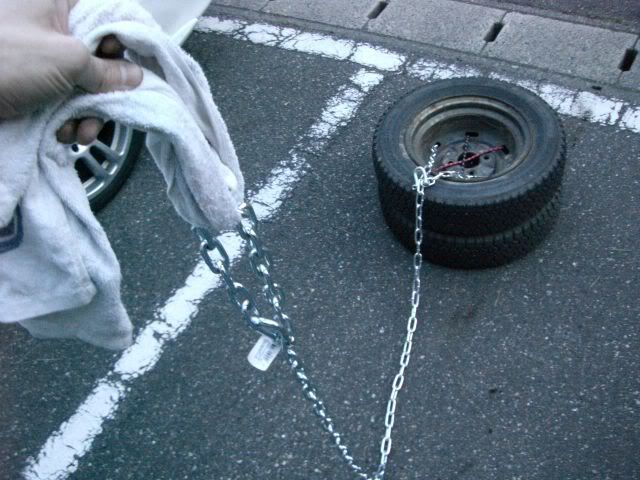
Sled dragging is one of my favorite exercises. It's a technically simple exercise - you load up a sled with weights and drag it. I've DIYed my own sled in the past (here is my tire rig sled from when I was living in Japan) and I've pulled manufactured sleds, too. You can use them for a variety of exercises, such as dragging it in on a rope or just simply walk around with one dragging behind you.
Here are some resources for sled-dragging available on the web. I know there is at least on ebook on the subject, but this is a collection of free resources.
Chandler, Brian. Dragging and Pacing (found in Dan John's Get Up newsletter, page 9)
Evan-Esch, Zack. Endless Sled Dragging Variations That Will Dramatically Improve Your Performance
Tate, Dave. Drag Your Butt Into Shape
Wilson, Todd. Sled Dragging Part II: The Fundamentals
Here you can see the crowd at DeFranco's doing something I used to do in Japan - weighting a sled with kids. Mine wasn't so deliberate, actually. I'd load up my sled and start dragging it, and the neighborhood kids decided it looked fun and asked for rides. Soon enough I'd be dragging so many kids I couldn't move the sled. They call that "progressive loading."

Here are some resources for sled-dragging available on the web. I know there is at least on ebook on the subject, but this is a collection of free resources.
Chandler, Brian. Dragging and Pacing (found in Dan John's Get Up newsletter, page 9)
Evan-Esch, Zack. Endless Sled Dragging Variations That Will Dramatically Improve Your Performance
Tate, Dave. Drag Your Butt Into Shape
Wilson, Todd. Sled Dragging Part II: The Fundamentals
Here you can see the crowd at DeFranco's doing something I used to do in Japan - weighting a sled with kids. Mine wasn't so deliberate, actually. I'd load up my sled and start dragging it, and the neighborhood kids decided it looked fun and asked for rides. Soon enough I'd be dragging so many kids I couldn't move the sled. They call that "progressive loading."
Friday, May 8, 2009
Amusing video contest
EliteFTS, makers of "The Prowler" - a particularly well-designed and brutal pushing and dragging sled - have a video contest.
They want the best videos of people suffering from "Prowler Flu" - the aftereffects of a Prowler conditioning session.
It's a pretty funny concept, and the videos they include can give you an idea of what a solid sled session can do to you!
Prowler Flu
They want the best videos of people suffering from "Prowler Flu" - the aftereffects of a Prowler conditioning session.
It's a pretty funny concept, and the videos they include can give you an idea of what a solid sled session can do to you!
Prowler Flu
Subscribe to:
Posts (Atom)